
 DACH
DACH
 FR-BE
FR-BE
 US-CAN

Ever stare at a concept map and think, 'This is a web, not a map'? You're not alone. When every connection looks identical, your brain has to work overtime to decode the relationships. The good news? A simple colour-coding system can transform a tangled mess into a clear, organised visual guide. Let's walk through exactly how to do it.
Start with Your Current Map
Look at your existing concept map. Chances are, you've got arrows pointing everywhere, each with a tiny linking word like 'causes', 'part of', or 'for example'. These words are brilliant—they turn each connection into a readable sentence. 'Rain causes plant growth' or 'Leaf is part of plant'. The problem? When all those arrows look the same, your eyes can't quickly distinguish one relationship type from another.
Take a moment to identify the main types of connections you're using. Most maps rely on three common categories:
- Cause-and-effect relationships (e.g., 'causes', 'leads to', 'results in')
- Part-whole structures (e.g., 'part of', 'includes', 'contains')
- Examples or instances (e.g., 'for example', 'such as', 'like')
Create a Simple Colour Key
Pick three colours and assign one to each relationship type. Keep it intuitive: blue for cause-effect, green for part-whole, orange for examples. Draw a tiny legend in the corner of your page. This key will be your reference point as you work.
Resist the urge to add more colours. Three is the magic number. Any more and your map starts to look like a rainbow exploded on it—visually overwhelming rather than helpful. Remember, the goal is instant clarity, not a showcase of your marker collection.
Apply Colours to Your Links
Now for the fun part. Start with one branch of your map and work systematically. As you colour each arrow, say the complete sentence out loud: 'Rain causes plant growth'. If it sounds fuzzy or unclear, pause. The issue is usually the linking word, not the colour. Adjust the phrase first, then apply the colour.
Work through your map methodically. When you encounter cross-links—connections between distant branches—choose the colour that best fits the specific relationship you're showing. These cross-links often reveal the most interesting insights, so take extra care with them.
Experience the Clarity
Step back and look at your newly colour-coded map. Notice how patterns jump out at you now? You can instantly see where you have lots of examples but few causes, or where a strong part-whole structure needs more real-world cases. Your brain no longer has to decode each connection individually—it can grasp the big picture at a glance.
This visual system doesn't just make your map prettier; it makes your thinking visible. When you can spot patterns quickly, you understand the material more deeply. Try colour-coding your next five connections and watch how much faster the concepts click into place.
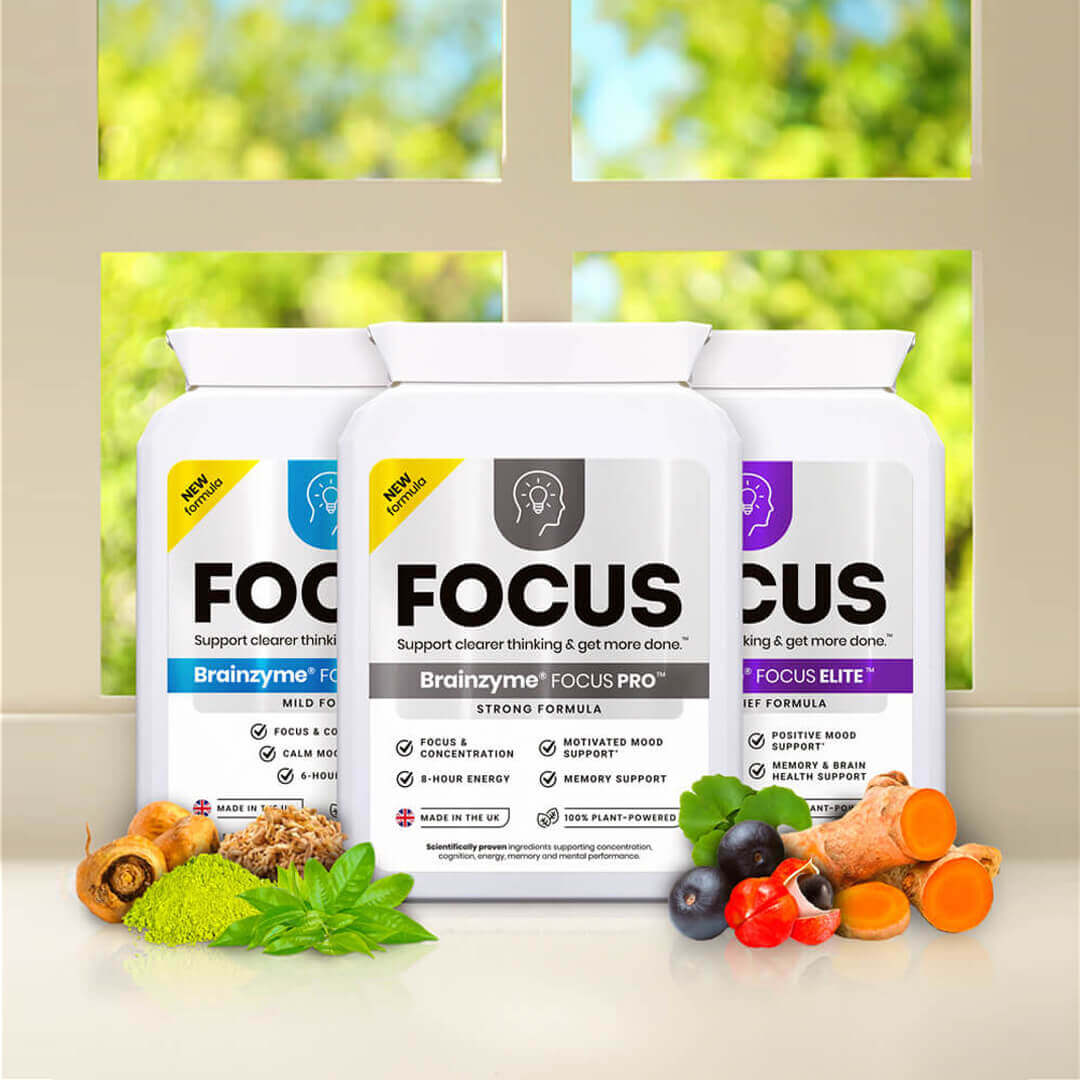
At Brainzyme, we're passionate about tools and techniques that support clear thinking and effective learning. If you're looking for additional support to maintain focus during intense study sessions, explore our scientifically proven plant-powered focus supplements.
Visit www.brainzyme.com to discover how our natural formulas can complement your study strategies and help you achieve your learning goals.