

 DACH
DACH
 FR-BE
FR-BE
 US-CAN




Brainzyme® FOCUS™
Starter Bundle
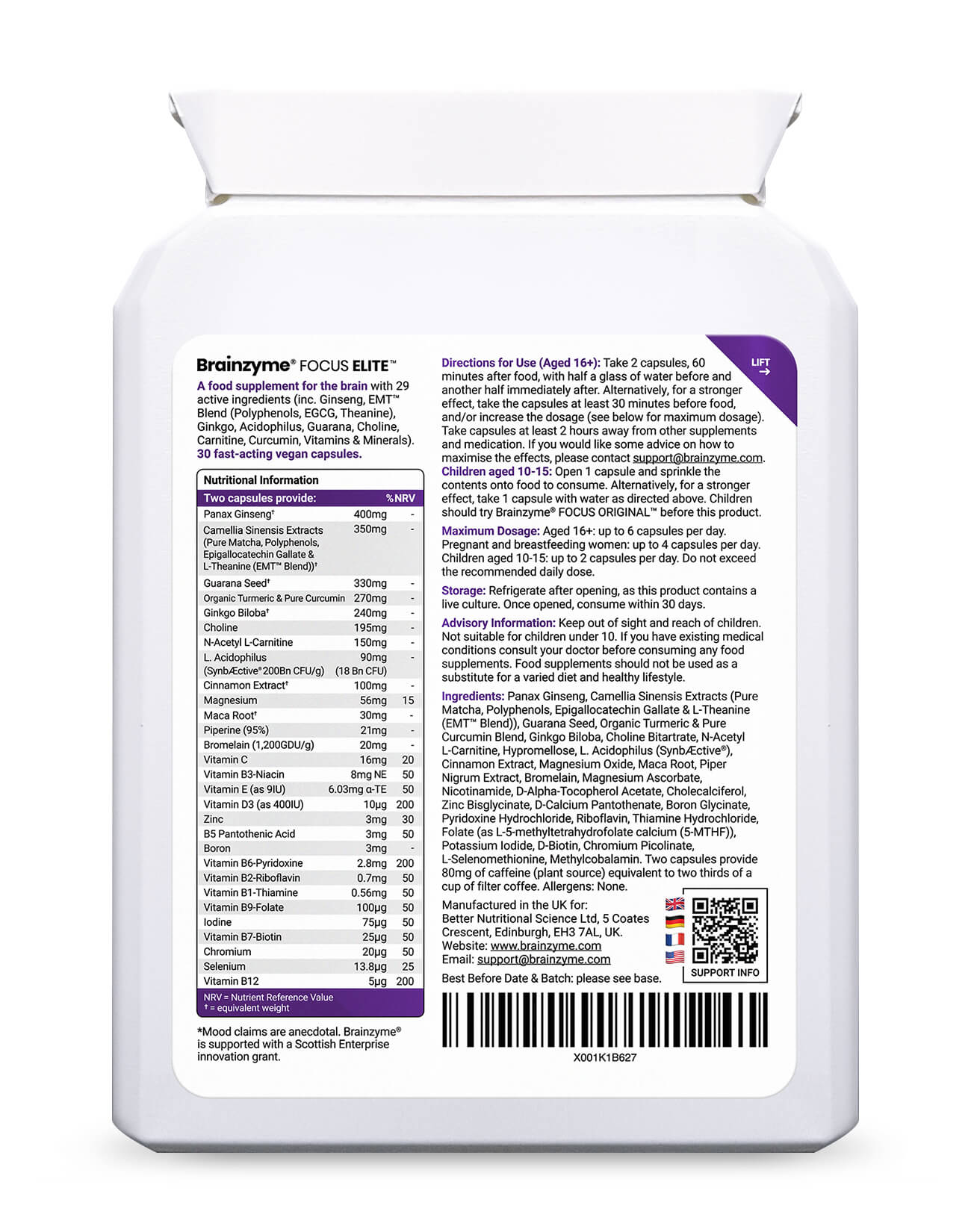
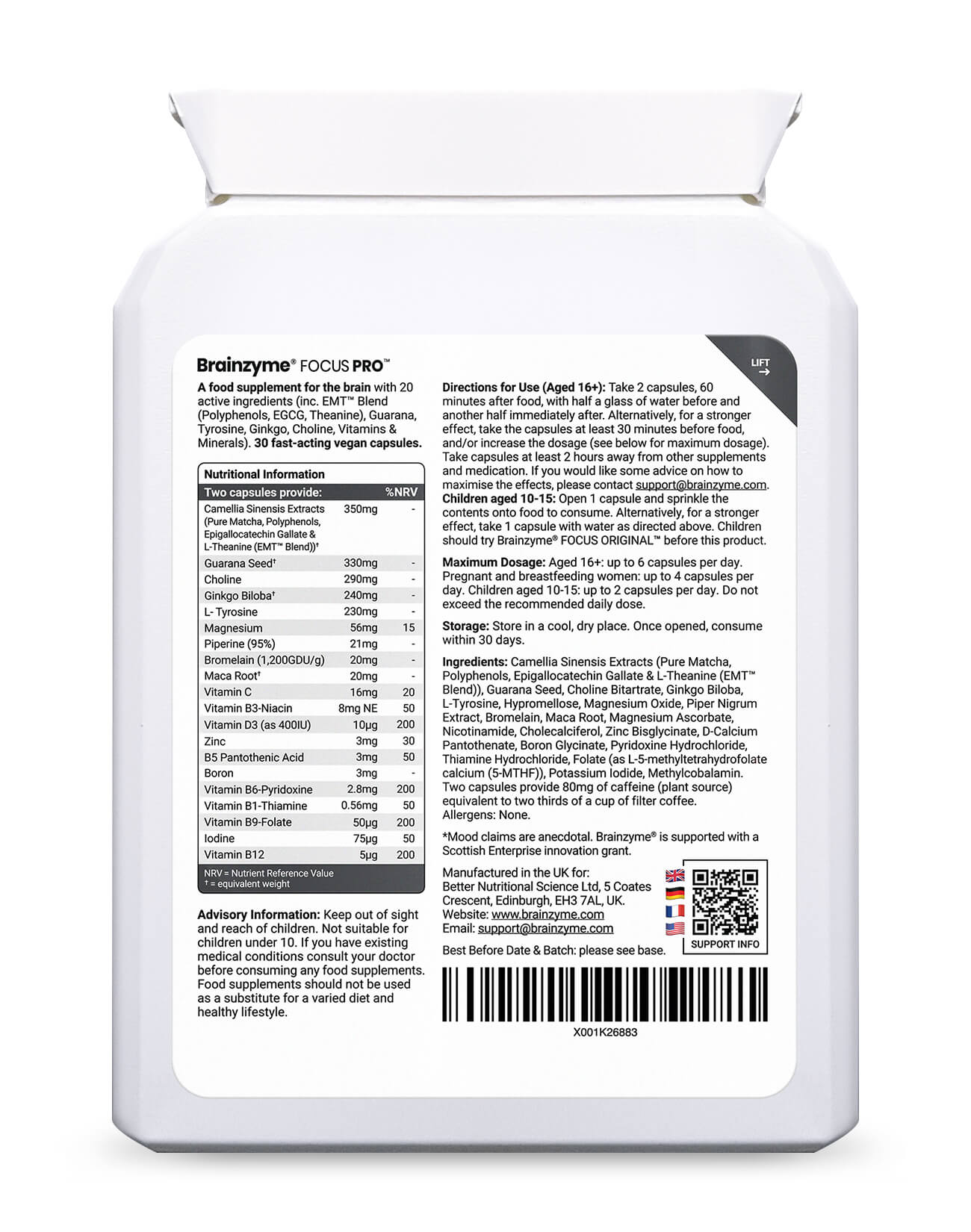
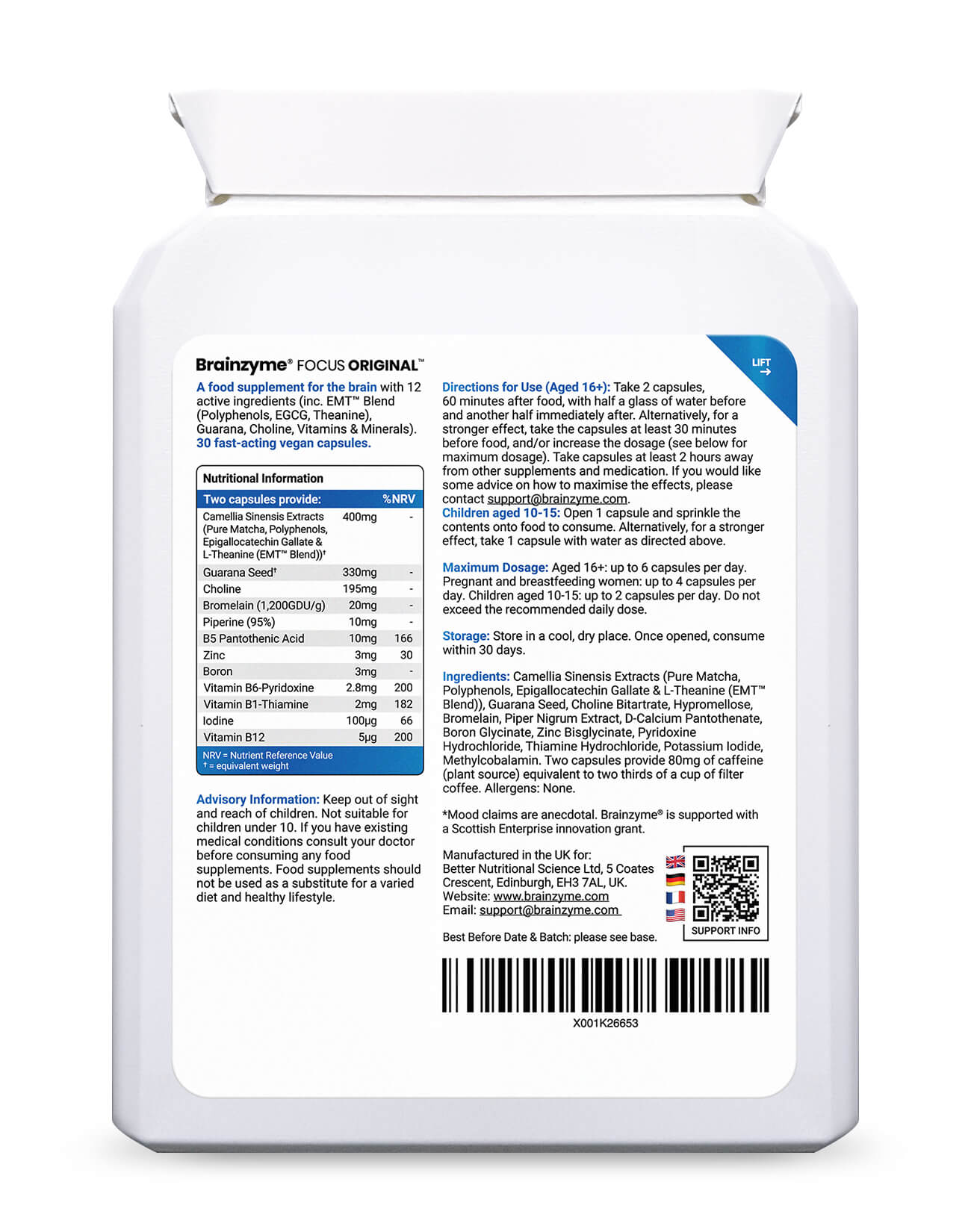
Brainzyme® FOCUS™
Starter Bundle
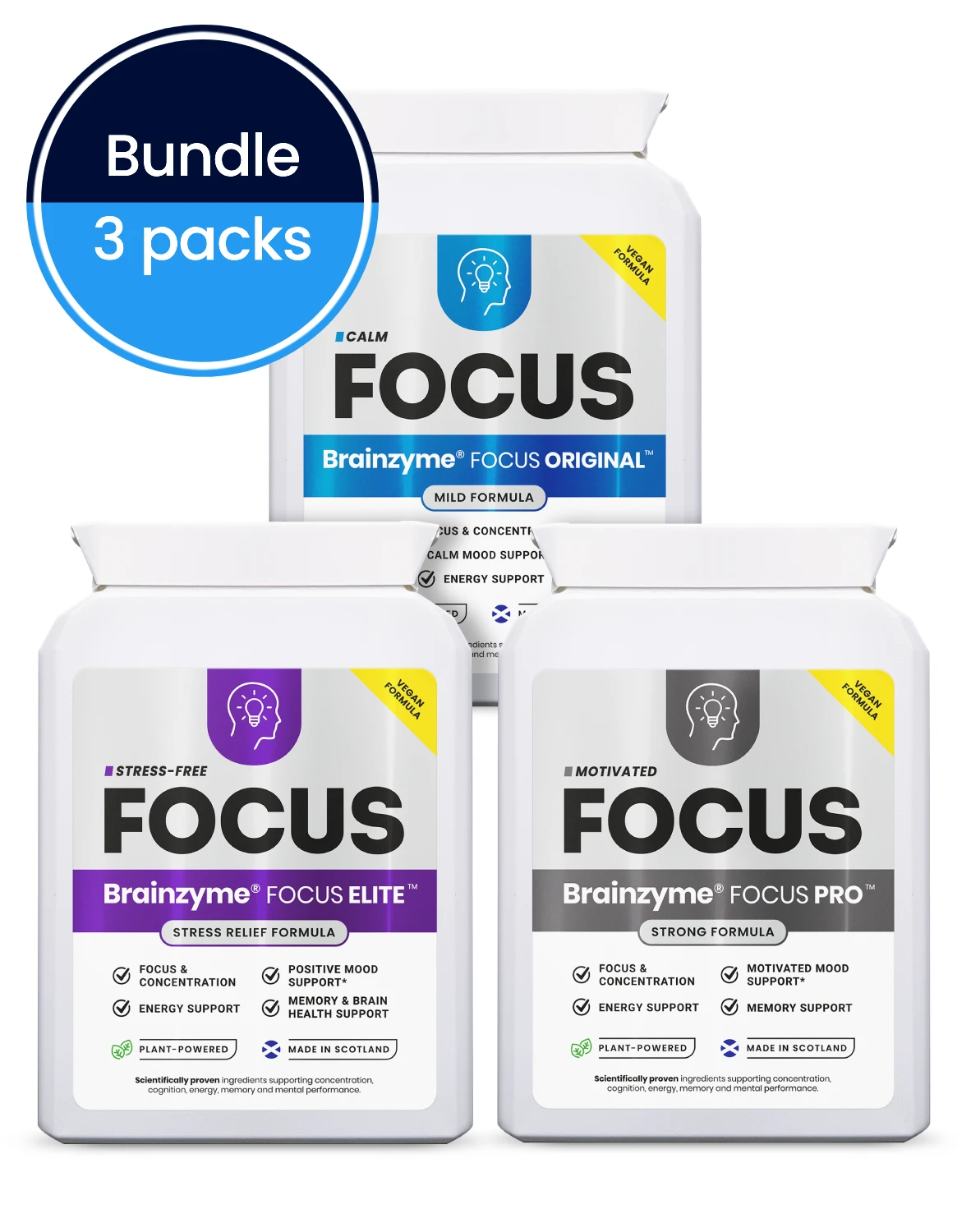
Get all of our best-selling Brainzyme® FOCUS™ formulas in a 3 Formula Set.
Motivation, stress relief, or calm mood with powerful focus - all in one bundle. The Brainzyme® FOCUS™ Starter Bundle contains all 3 plant-powered formulas using scientifically proven ingredients that provide brain nutrition to support a sustained focus and mental energy boost, with mood, and memory, Dopamine & daytime GABA support. They help you Think Clearer, Get More Done™.
- Improved focus & concentration
- 6-8 hour mental energy
- Motivated, positive and calm mood support
- Stress-relief & memory support
- Dopamine & GABA (daytime) support
- Three different formulas
- Perfect for first-time customers
- £0.98 per daily serving


Dispatched from: United Kingdom.
Postage:
- UK: Free tracked shipping (letterbox friendly!)
- International: Free tracked shipping for orders over £40
- More options at checkout.
Est. Delivery Time:
- UK: 2-3 working days
- International: 3-7 working days. country list
Returns: Accepted within 365 days for a full refund or exchange. see details

Clean, Scientifically Proven & Plant-Powered Brain Nutrition

Our clean and powerful formulas do not contain additives, fillers or binders - only essential active ingredients that deliver effective brain nutrition to support your focus.
All of our supplements contain plant and herbal extracts, essential vitamins and minerals that are scientifically proven to support concentration, cognition, energy, memory and mental performance.


Vegan-Friendly

Gluten-Free

Allergen-Free

GMO-Free

Cruelty-Free

Gelatin-Free

Sugar-Free

Soy-Free




What to Expect
Focus, mental energy, mood & memory support, starting from day one.


Get all of our best-selling Brainzyme® FOCUS™ formulas in a 3 Formula Set.
What Is the Brainzyme® FOCUS™ Starter Bundle?
The Brainzyme® FOCUS™ Starter Bundle is a 3 Formula Set containing all of the best-selling Brainzyme® FOCUS™ supplements. This bundle brings together the full range of formulas, each containing scientifically proven ingredients, essential vitamins and minerals, and plant-powered compounds, giving you access to the complete Brainzyme® FOCUS™ range in one set.
Who Is the Brainzyme® FOCUS™ Starter Bundle For?
The Brainzyme® FOCUS™ Starter Bundle is the perfect for first-time customers, or for those who like to choose their focus and mood for the day.
What Are the Benefits of the Brainzyme® FOCUS™ Starter Bundle?
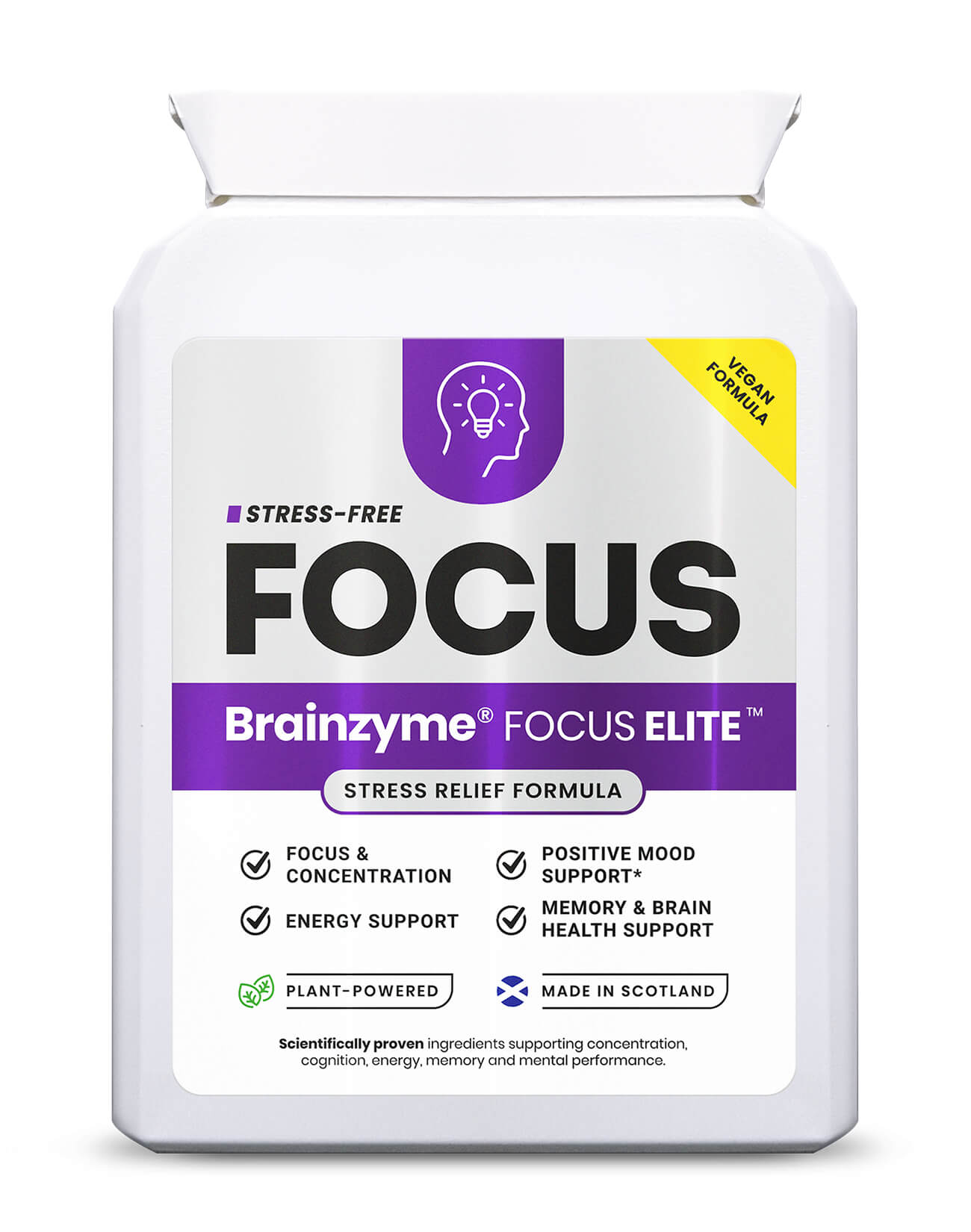
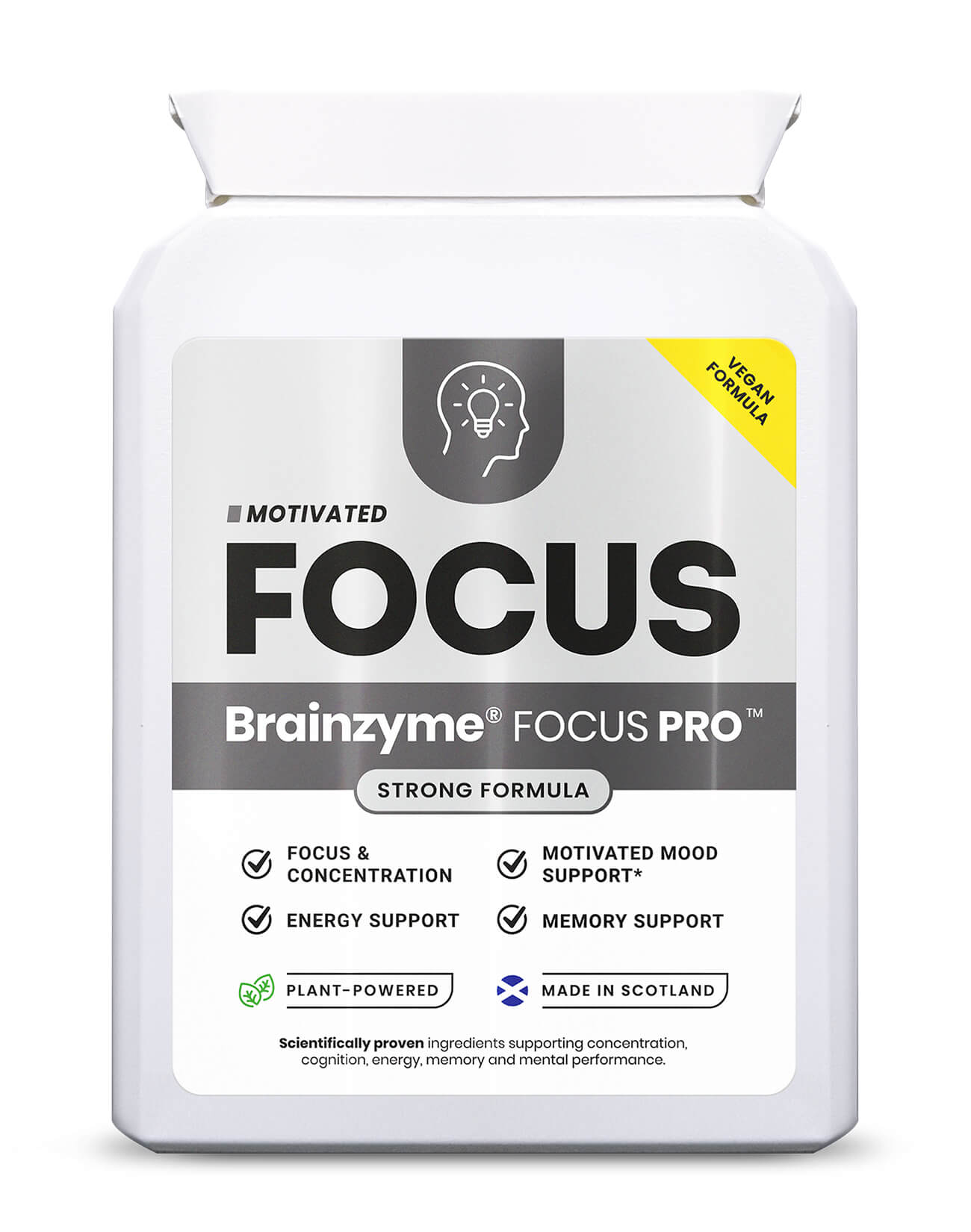
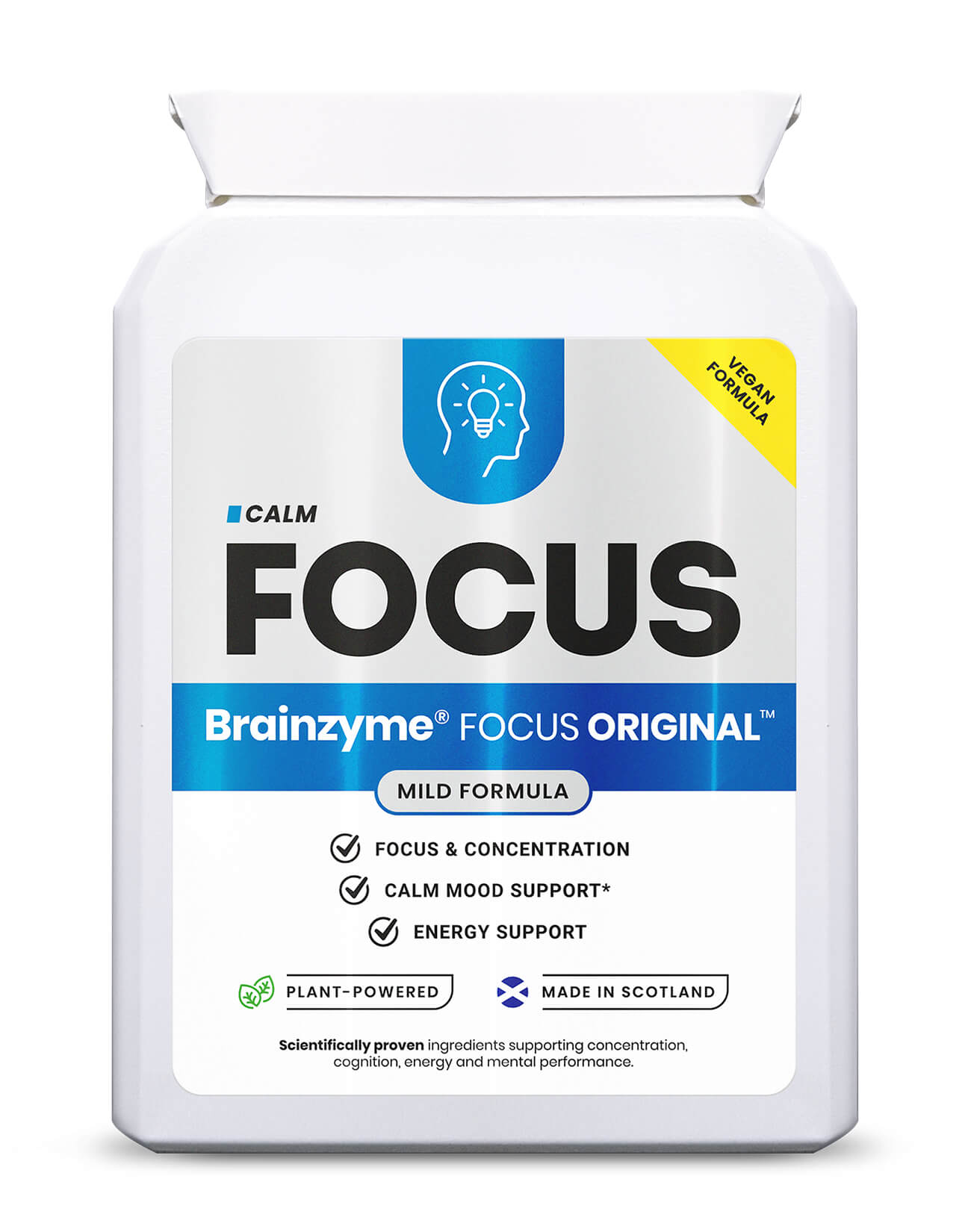
The three formulas support sustained focus, mental energy, mood, memory, long-term brain health, and provide dopamine and daytime GABA support. With the full range available, you can adapt to whatever your day demands, whether you need stronger focus, stress-free support, or a milder option. It helps you Think Clearer, Get More Done™.
What Makes the Brainzyme® FOCUS™ Starter Bundle Different?
Fast-Acting and Easily Absorbed from Day 1
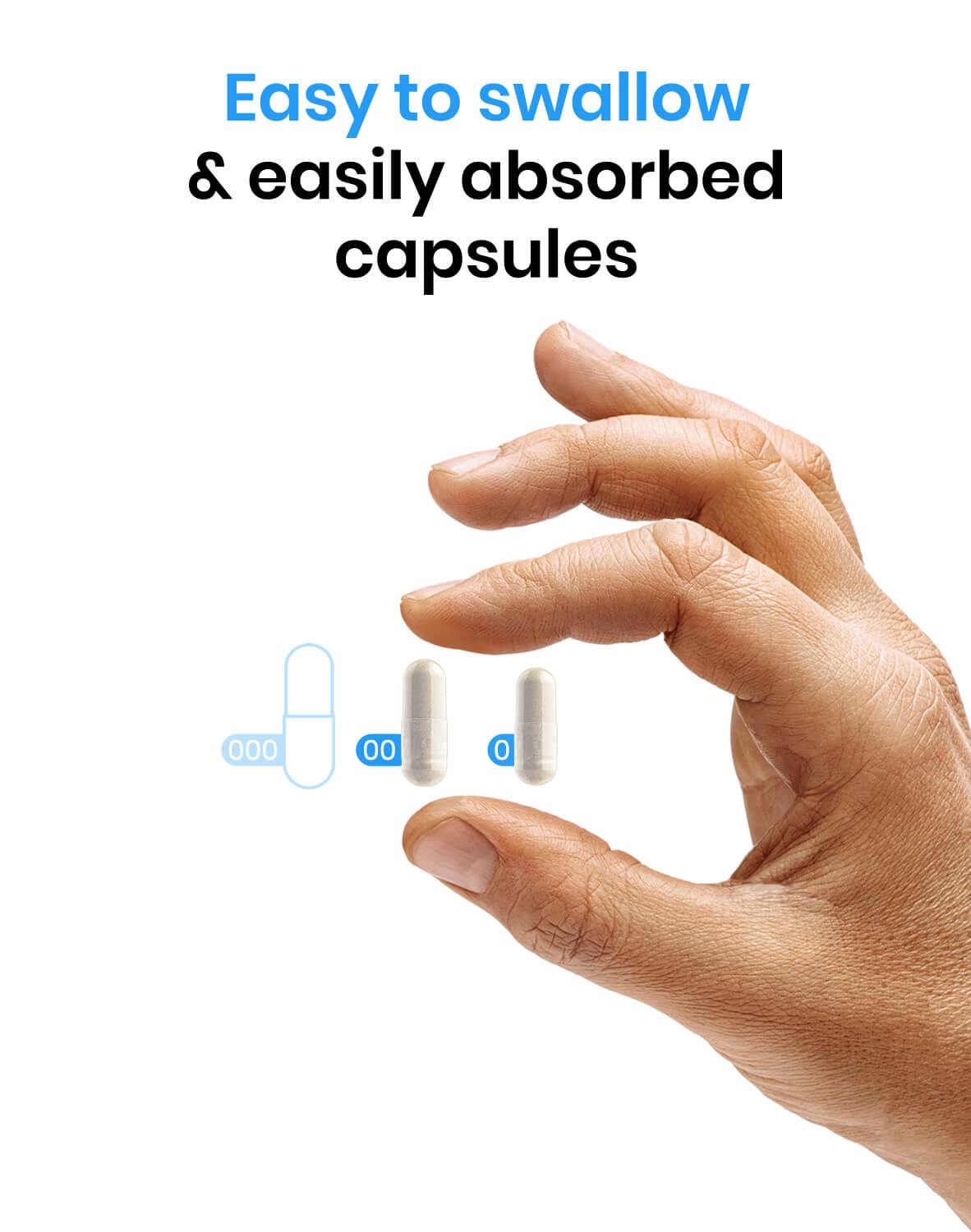
Two easy-to-swallow capsules per formula, no complicated routines or preparation. Just three straightforward daily supplements that fit into any lifestyle.
3 Formulas, Scientifically Proven, Plant-Powered Ingredients
At £0.98 per daily serving, the Brainzyme® FOCUS™ Starter Bundle gives you all three expertly formulated focus supplements in one set, each with a vegan-friendly, gluten-free, allergen-free, GMO-free, sugar-free and soy-free formulation. Find the formula that works best for you.
365-Day Return & Exchange Policy
Made in Scotland with British safety standards, Brainzyme® FOCUS™ Starter Bundle is fully compliant with EFSA and UK Department of Health regulations, with free UK shipping and a world-class 365-day return and exchange policy.
We Understand
At Brainzyme®, we understand the importance of staying focused and energised and how it can impact your daily life.
Our supplements are specially formulated to support focus, mental energy, mood and memory.
Brainzyme® FOCUS™ supplements have helped thousands of people to Think Clearer, Get More Done™!

Why Choose Brainzyme® FOCUS™?
Fast
Starts working from day 1.
Easy
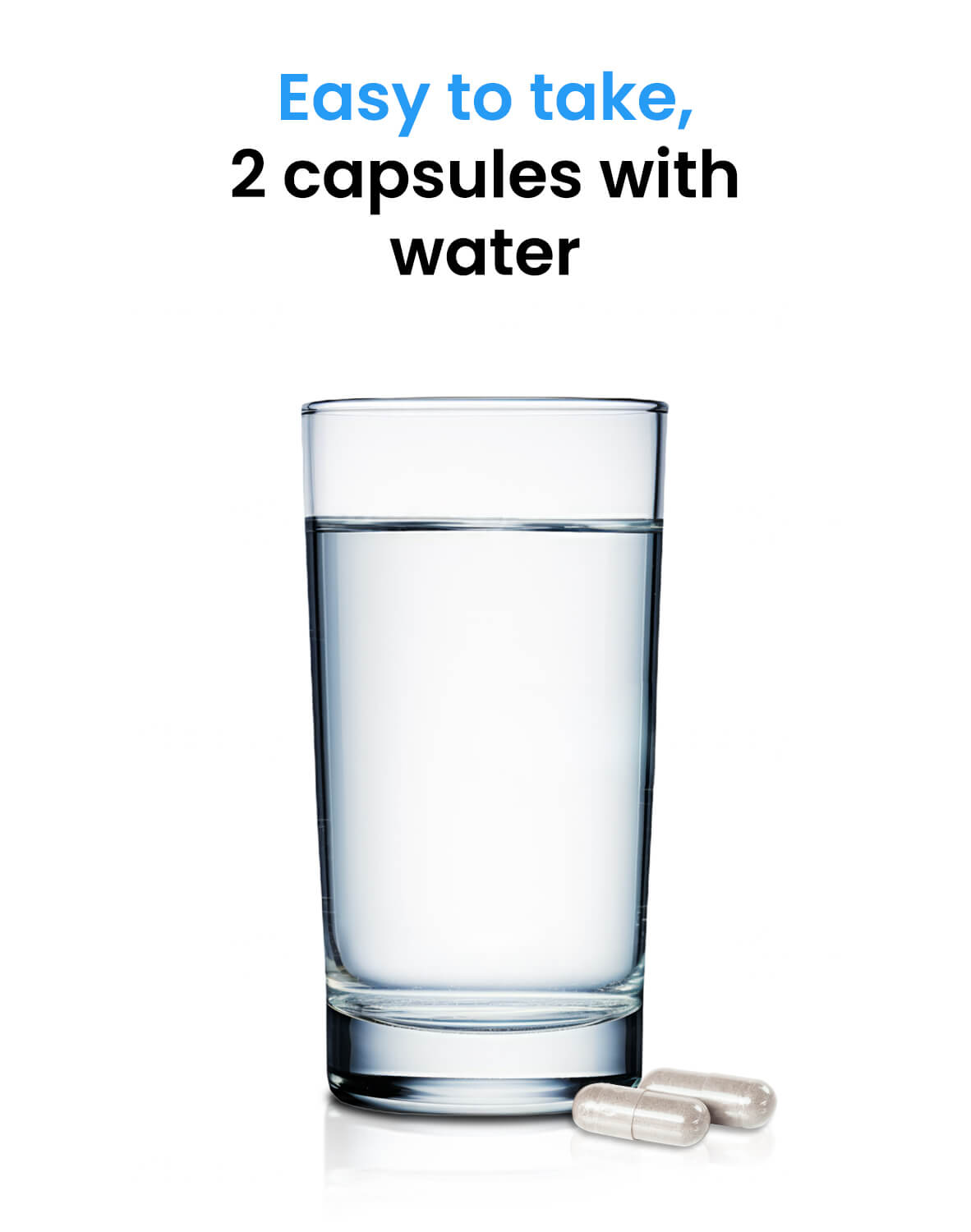
Select one of three formulas, take 2 capsules - job done!
Healthy & Clean
Plant-powered - no additives, fillers or binders.
Powerful
Scientifically proven ingredients with a gut-friendly probiotic.

All Brainzyme® supplements are made in Scotland, UK with British safety standards (British Department of Health & EFSA compliant).
Frequently Asked Questions


Boost your focus effortlessly.

Fast & Easy
Take 2 capsules of this fast-acting and easily absorbed formula. Starts working from day 1.

Powerful Focus
Out of our customers, 95% report improved focus and mental energy support.

Purchase With Confidence
Safe and secure checkout. Trusted by thousands of satisfied customers.
Fast & Easy
Take 2 capsules of this fast-acting and easily absorbed formula. Starts working from day 1.
Powerful Focus
Out of our customers, 95% report improved focus and mental energy support.
Purchase With Confidence
Safe and secure checkout. Trusted by thousands of satisfied customers.
Trusted by 2000+ Medical Professionals
Our supplements have been personally used and recommended by over 2,000 medical professionals and practitioners worldwide.

Dr. Sarah Nicholls
“Brainzyme® [FOCUS™] contains matcha, guarana and choline, which are all well known to boost cognitive effects.“
Watch video
Dr. Amelia Kelley, PhD
Author, Therapist, Professor & TEDx Speaker, US
“I chose to partner with Brainzyme® to stay focused when my brain feels foggy or scattered on really full days.“
Watch video
Dr. med. Cordelia Schott
Specialist in orthopaedics & sports medicine, Germany
“All the ingredients should help you to concentrate better and think faster.“
Watch video
Dr. Christian Galli
Neurologist, Austria
“As a cognitive health expert, I have tested a few supplements, but Brainzyme® FOCUS PRO™ stands out as the best cognitive focus supplement.“

Dr. med. Georgia Brunner
Psychiatry and Psychotherapy, Switzerland
“I definitely experienced increased energy with Brainzyme®. I have patients with low energy and concentration problems, and they prefer FOCUS PRO™ and FOCUS ELITE™.“

Dr. Natalia Bielczyk
Neuroscientist & Founder, Netherlands
“Despite almost a decade in neuroscience research, it’s the first time I’m testing nootropics. My mood is very stable, and cognitive flexibility at work seems to have improved. My verdict: On many levels, it works.“

Dr. Michal Nowicki
MD, MPharm - Cardiologist, Poland
“The tangible benefits I've derived from Brainzyme® FOCUS™ are indispensable to my career, and I am genuinely grateful.“

Catherine Amido
Registered Nutritional Therapist, UK
“FOCUS ELITE™ is the one that’s really made a difference for me. I’ve noticed more focus, calm energy, and less of that scattered feeling that can take over. And I’ve been recommending them to my clients.”
Watch video
Dr. Tracy King
Chartered Clinical Psychologist, UK
“I am neurodivergent and I tried all three Brainzyme® FOCUS™ supplements. PRO™ is the one I reach for when I need to get things done, like high-output days, deadlines, or focus sprints, without the crash.”

Helen Villiers
Psychotherapist (MBACP), UK
“I love them. I cannot recommend them highly enough if you are struggling with focus or brain fog.“
Watch video
Ludovico Sadic
“It can really help and it provides a very viable complement to focus and concentration meds.“
Watch video
Christine Bailey
Nutritional therapist (MSc MBANT CNHC), UK
“Brainzyme® contains a range of nutrients known to help with focus and concentration.“
Watch video
Elodie Malek
“It's been a few months since I started taking it, and I've truly noticed a difference in my concentration, my stress levels, and my emotional balance. So, I highly recommend it.“
Watch video
Dr. Sumera Baloch
Doctor, UK
“I wanted to try something to help me with focus and concentration. I found [Brainzyme®] FOCUS™. I tried it, and I have to be honest, it actually helped me, no doubt!“

Dr. Alba Morais
Core Trust Doctor: Trauma & Orthopaedics, UK
“I use Brainzyme® very often to help me with work as it helps me to focus, relax and prioritise my tasks.“

Dr. Saurav Kayastha
Physician, US
“I have been using this product for a little less than a year for energy, focus and procrastination. This product works like magic. I would highly recommend it.“

Daniel Curran
NHS Physiotherapist, UK
“I bought the Starter Bundle and have been switching between the 3 types for 2 weeks now. A noticeable difference in my mood, focus and motivation. It takes about an hour to kick in the morning.“

Victoria Bell
Registered Nutritional Therapist, UK
“Each formula has a different combination of vitamins, minerals, amino acids and other food-based nutrients. These have a synergistic effect on your nervous system and promote calmness, alertness and focus.“

Miriam Liguori
ICU Nurse, Germany
“I noticed a huge improvement focusing on tasks and I feel more awake and energised on a daily basis.“

Devina Dickson
Mental Health Nurse, UK
“I have been using Brainzyme® focus for over a year now, and find my focus is better and I can concentrate for longer periods.“

Emma Lee
Biomedical Scientist, UK
“It has officially been a life changer. I am pleased with the results so far. I wish I had found Brainzyme® years earlier.“

Jonny Hugill
Registered Mental Health Nurse, UK
“I noticed increased focus, improved mood and wellbeing. It has helped me get more done and feel more involved in things.“

Corinne Z
Physiotherapist, Germany
“I have been suffering from Long Covid then discovered Brainzyme® and now I have more energy and enjoy everything I do again.“
Brainzyme® featured in the media

“Brainzyme® [FOCUS™] is… aimed at helping people who want to think more clearly and be more focused and less distracted.“

“I use [Brainzyme® FOCUS™] to give me some much needed plant-powered concentration and better mental performance, and l feel so much better for it.“

“The most noticeable effect…was the alleviation of my mid-afternoon slump…[Brainzyme® FOCUS™] convinced me that nootropics are something worth pursuing.“

“Stay on top of your planning, diary dates and all your other tasks with a nutrient combo designed to optimise your brain with Brainzyme® [FOCUS™].“

“Brainzyme® [FOCUS™], a natural brain enhancer aimed at providing optimum nutrition to the brain, while giving an immediate lift in cognitive function [has] arrived.“
Our Customer Service Promise

FREE SHIPPING OPTIONS
UK: Free tracked shipping for all orders.
International: Free international shipping on orders over £40 - all orders Tracked and/or Signed For.


365-DAY RETURNS & EXCHANGES
We are confident you'll love our supplements as much as we do, which is why we have a 100% satisfaction guarantee for 365 days so that you can try our products completely risk-free.

CUSTOMER SUPPORT
Our highly-trained customer support team is on hand to chat via phone, email, live chat or social media to guide you through your Brainzyme® experience.
About Brainzyme®
Brainzyme® supplements are formulated and manufactured by Nutraceutical Logistics Global, based in Scotland.
We are one of the UK’s first brain supplement (natural nootropic) specialists to formulate products that deliver brain nutrition through scientifically proven plant-powered ingredients and essential nutrients, aiding individuals to ‘Think Clearer, Get More Done™’.
Since 2016, our products have been trusted by hundreds of thousands of customers, receiving thousands of 5-star reviews and positive feedback from medical experts. Operating globally from our headquarters in Edinburgh, we maintain dedicated websites and warehouses in the UK, Germany, France, and USA.

Brainzyme® supplements are formulated and manufactured by Nutraceutical Logistics Global, based in Scotland.
We are one of the UK’s first brain supplement (natural nootropic) specialists to formulate products that deliver brain nutrition through scientifically proven plant-powered ingredients and essential nutrients, aiding individuals to ‘Think Clearer, Get More Done™’.
Since 2016, our products have been trusted by hundreds of thousands of customers, receiving thousands of 5-star reviews and positive feedback from medical experts. Operating globally from our headquarters in Edinburgh, we maintain dedicated websites and warehouses in the UK, Germany, France, and USA.
*Mood claims are anecdotal.
Guaranteed SECURE Checkout
We use encrypted SSL security to ensure that your credit card information is 100% protected.


GUARANTEED DATA PROTECTION
We are registered with the UK's ICO (Information Commissioner's Office). The ICO is the UK’s independent authority set up to uphold information rights in the public interest, promoting data privacy for individuals.

365-DAY RETURNS & EXCHANGES
Our 100% satisfaction guarantee means you can try Brainzyme® FOCUS™ completely risk-free. Make returns or exchanges within 365 days.

Join the Brainzyme® Community
Trusted by 120,000+ happy customers