

 DACH
DACH
 FR-BE
FR-BE
 US-CAN
Why Perimenopause Can Affect Your Focus — and How to Support It Naturally
Brainzyme® TeamStress-free focus through perimenopause. Plant-powered. Trusted by 2,000+ medical professionals.
Plant-powered GABA support. No HRT. Why perimenopause affects focus — and the brain-chemistry approach that helps.
📚 The Honest Perimenopause Focus Guide — Plant-Powered, No Hype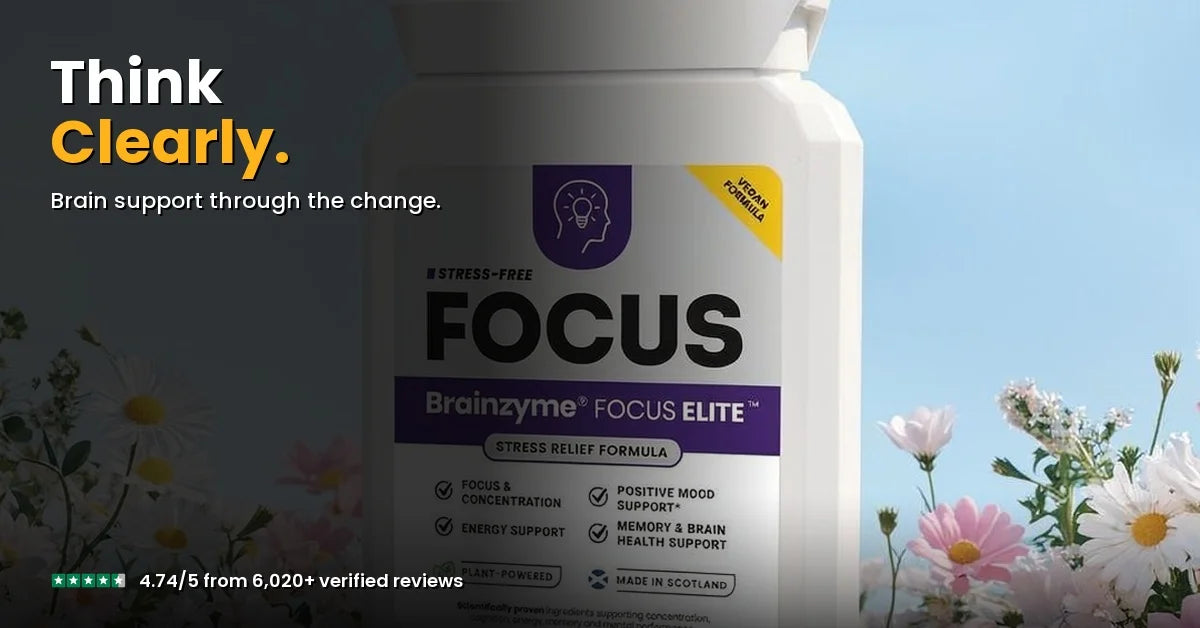
It's Not Just Tiredness — It's Your Brain Chemistry
If you've noticed your focus feeling less sharp, your mood harder to steady, or your stress response more reactive since entering your 40s — you're not imagining it, and it's not weakness.
Perimenopause — the years of hormonal transition before menopause — involves measurable changes to the very neurotransmitter pathways that regulate calm, focus, and mood. Understanding what's happening helps you support it intelligently.
Oestrogen has a well-established relationship with GABA receptors. During perimenopause, as oestrogen levels become erratic, the GABA system — which helps the brain regulate stress responses and maintain calm focus — can become less stable. This isn't a mental health problem. It's a neurochemical one.
Research published in the journal Neuroscience and reviewed by the British Menopause Society shows a clear link between reduced oestrogen and decreased GABA-A receptor sensitivity. The result: the nervous system becomes more reactive, calm focus requires more effort, and the brain fog many women describe is a predictable consequence of this mechanism.

Sources: British Menopause Society, Neuroscience research, Nobre et al. 2008, Brainzyme® product specification
The good news: GABA pathway support through targeted nutritional ingredients is well-researched, and many women find it makes a meaningful difference to their focus and mood quality during this life stage.
Do Any of These Sound Familiar?
Perimenopause affects focus and mood in recognisable patterns. Tap any that resonate with you.

Your focus feels less reliable than it used to
You used to be able to hold a thought, work through a complex task, or absorb information easily. Now it takes more effort, and the concentration can slip. It feels unfair — because it is.
Stress feels harder to shake off
A difficult conversation, a tight deadline, or even a long day — and the tension stays with you longer than it used to. Recovery feels slower. The baseline is higher.
Your mood can shift quickly and unexpectedly
Not dramatic swings — just a more variable emotional baseline. Good days feel genuinely good; difficult days feel harder to navigate. The steadiness you used to have feels less automatic.
Sleep quality has changed
Waking in the night, difficulty falling back to sleep, or just not feeling rested. Poor sleep compounds every other symptom — focus, mood, stress resilience. It's a cycle.
The brain fog is real — not laziness
You know what you're capable of. But there are days where the cognitive sharpness just isn't there — words don't come easily, tasks take longer, the mental clarity feels clouded. This is neurochemical, not motivational.
You're managing this alongside everything else
Work, family, relationships, health decisions. Perimenopause doesn't pause the rest of life. You're looking for support that works alongside your life — plant-powered nutrition you can build into a busy routine, no upheaval required.
Where Nutritional Support Fits In

Perimenopause is a medical reality, and for many women HRT, lifestyle changes, and GP-guided care are important parts of managing it. This guide is about something narrower: the nutritional layer that sits alongside medical care — not instead of it.
What nutritional support can do is help the brain’s existing regulation systems work more effectively — specifically the GABA and stress-response pathways that are under more pressure during perimenopause. Think of it as giving your nervous system the raw materials it needs to do its job well during a demanding life stage.
Think of it this way: if your nervous system's natural regulation toolkit is under more pressure during perimenopause, giving it the raw materials it needs to function well is basic neurological self-care. The same way you'd prioritise sleep, movement, and a balanced diet during a demanding life stage — targeted nutritional support is one more tool available to you.
Many women find that calm focus and a steadier emotional baseline — the things they've noticed slipping — respond well to consistent nutritional support. That's what this guide is about.
What Nutrition Actually Can Do
Your brain uses roughly 20% of your body’s energy. It needs a constant supply of specific nutrients to function properly — and when those nutrients are missing or depleted, cognitive performance suffers.
Here’s what the research shows about specific botanicals and nutrients linked to attention, mood, and mental stamina:
Matcha & Green Tea
L-theanine, found naturally in matcha, has been studied extensively for its effects on attention and calm focus. Research suggests it supports a relaxed but alert mental state — without jitters or crashes.
Gut-Brain Axis
L. acidophilus live culture produces GABA directly in the gut, communicating with the brain via the vagus nerve. This gut-brain pathway is a second route for calm focus — and why ELITE includes a live culture alongside traditional GABA precursors.
Curcumin & Piperine
Curcumin crosses the blood-brain barrier and protects neurons from oxidative stress. Combined with piperine (black pepper extract) for dramatically improved absorption. Research links it to cognitive function improvements in multiple systematic reviews.
B Vitamins & Magnesium
Essential for nervous system function and energy metabolism. Studies show that even mild deficiencies in B6, B12, and magnesium can affect concentration, mood, and mental stamina — and many adults are deficient without realising it.
The full chain, not just one ingredient
The GABA pathway: L-Theanine crosses the blood-brain barrier. B6 converts glutamate to GABA. Magnesium activates GABA receptors. L. Acidophilus produces GABA in the gut. Curcumin protects the neurons. ELITE adds Layer 5 - Cell Protection (Selenium + Vitamin E) and Layer 6 - Energy Metabolism (Riboflavin + Biotin). L-Tyrosine is shared with FOCUS PRO™ to support the dopamine-pathway story alongside GABA.
Evidence: 138 Peer-Reviewed Studies
Tap any ingredient to view the studies behind the claims on this page. All citations are independent peer-reviewed journals.
Across the range: Delivered exclusively by ELITE (400 mg).
- Cognition‑enhancing effect of Panax ginseng in healthy adults: randomized, double‑blind, placebo‑controlled (2019) Journal of Ginseng Research . Available at: pmc.ncbi.nlm.nih.gov/articles/PMC6989239
- Effects of Korean red ginseng on human gray‑matter volume and cognition: randomized, double‑blind, placebo‑controlled (2021) Nutritional Neuroscience . Available at: pubmed.ncbi.nlm.nih.gov/33217050
- Emerging evidence that ginseng components improve cognitive function: narrative review (2024) Aging and Disease . Available at: pmc.ncbi.nlm.nih.gov/articles/PMC11068985
- Effects of Korean red ginseng in individuals exposed to high stress: randomized, double‑blind, placebo‑controlled (2019) Journal of Ginseng Research . Available at: pubmed.ncbi.nlm.nih.gov/31308812
- Safety and tolerability of Korean red ginseng in healthy adults: 24‑week randomized trial (2018) Journal of Alternative and Complementary Medicine . Available at: pmc.ncbi.nlm.nih.gov/articles/PMC6190494
- Dose dependent changes in cognitive performance and mood following acute administration of Ginseng to healthy young volunteers (2001) Nutritional Neuroscience . Available at: pubmed.ncbi.nlm.nih.gov/11842896
- Modulation of cognition and mood following administration of single doses of Ginkgo biloba, ginseng, and a ginkgo/ginseng combination to healthy young adults (2002) Physiology & Behavior . Available at: pubmed.ncbi.nlm.nih.gov/12020739
- Effects of Panax ginseng, consumed with and without glucose, on blood glucose levels and cognitive performance during sustained ‘mentally demanding’ tasks. Journal of Psychopharmacology . Available at: doi.org/10.1177%2F0269881106061516
Across the range: Delivered in all three (ORIGINAL 400 mg / PRO 350 mg / ELITE 350 mg as EMT blend).
- A double‑blind, placebo‑controlled study evaluating the effects of natural stimulant and L‑theanine both alone and in combination on cerebral blood flow, cognition and mood (2015) Psychopharmacology . Available at: pubmed.ncbi.nlm.nih.gov/25761837
- Effects of L‑theanine on cognitive function in middle‑aged and older adults: a randomized placebo‑controlled study (2021) Journal of Medicinal Food . Available at: pubmed.ncbi.nlm.nih.gov/33751906
- Green tea extract enhances parieto‑frontal connectivity during working‑memory processing (2014) Psychopharmacology . Available at: pubmed.ncbi.nlm.nih.gov/24643507
- The Effects of Green Tea Extract on Working Memory in Healthy Women (2018) Nutrients . Available at: pubmed.ncbi.nlm.nih.gov/29484360
- Green tea effects on cognition, mood and human brain function: a systematic review (2017) Phytomedicine . Available at: pubmed.ncbi.nlm.nih.gov/28899506
- Effects of L‑theanine administration on stress‑related symptoms and cognitive functions in healthy adults: a randomized, placebo‑controlled study (2019) Nutrients . Available at: pubmed.ncbi.nlm.nih.gov/31623400
- The effects of the green‑tea amino acid L‑theanine on stress/anxiety outcomes: systematic review (2020) Nutrients . Available at: pubmed.ncbi.nlm.nih.gov/31758301
- High‑dose L‑theanine–natural stimulant combination improves ERP P3b and selective attention after sleep loss (2024) Nutrients . Available at: pubmed.ncbi.nlm.nih.gov/40789769
- The deployment of intersensory selective attention: a high-density electrical mapping study of the effects of theanine. Clinical Neuropharmacology . Available at: www.ncbi.nlm.nih.gov/pubmed/17272967
- L-Theanine and caffeine in combination affect human cognition as evidenced by oscillatory alpha-band activity and attention task performance. The Journal of Nutrition . Available at: www.ncbi.nlm.nih.gov/pubmed/18641209
- L-Theanine reduces psychological and physiological stress responses. Biological Psychology . Available at: www.ncbi.nlm.nih.gov/pubmed/16930802
- L-Theanine, a natural constituent in tea, and its effect on mental state. Asia Pacific Journal of Clinical Nutrition . Available at: www.ncbi.nlm.nih.gov/pubmed/18296328
Across the range: Delivered by PRO (240 mg) and ELITE (240 mg).
- Acute, dose-dependent cognitive effects of Ginkgo biloba, Panax ginseng and their combination in healthy young volunteers: differential interactions with cognitive demand (2002) Human Psychopharmacology: Clinical and Experimental . Available at: pubmed.ncbi.nlm.nih.gov/12404705
- The dose‑dependent cognitive effects of acute administration of Ginkgo biloba to healthy young volunteers (2000) Psychopharmacology . Available at: pubmed.ncbi.nlm.nih.gov/11026748
- Differential cognitive effects of Ginkgo biloba after acute and chronic treatment in healthy young volunteers (2005) Psychopharmacology . Available at: pubmed.ncbi.nlm.nih.gov/23001963
- Neuroprotective effects of Ginkgo biloba extract. Cellular and Molecular Life Sciences . Available at: doi.org/10.1007/s00018-003-3080-1
- Ginkgo biloba extract review on CNS effects. Ann Clin Psychiatry . Available at: pubmed.ncbi.nlm.nih.gov/12938868
- Demonstration of the "anti-stress" activity of an extract of Ginkgo biloba using a discrimination learning task. General Pharmacology: The Vascular System . Available at: doi.org/10.1016/0306-3623(94)90111-2
- Chemical analysis of Ginkgo biloba leaves and extracts. Journal of Chromatography A . Available at: doi.org/10.1016/S0021-9673(02)00172-3
Across the range: Delivered exclusively by ELITE (90 mg, 18 Bn CFU).
- Probiotics: The Next Dietary Strategy against Brain Aging (2022) Preventive Nutrition and Food Science (PNF) . Available at: pmc.ncbi.nlm.nih.gov/articles/PMC9007707
- Health-Promoting Effects of Lactobacillus acidophilus and Its Technological Applications in Fermented Food Products and Beverages (2024) Fermentation . Available at: pmc.ncbi.nlm.nih.gov/articles/PMC8754107
- The gut-brain axis: interactions between enteric microbiota, central and enteric nervous systems. Annals of Gastroenterology . Available at: www.ncbi.nlm.nih.gov/pmc/articles/PMC4367209
- Probiotic, Prebiotic, and Brain Development. Nutrients . Available at: doi.org/10.3390/nu9111247
- Effect of Probiotics on Central Nervous System Functions in Animals and Humans: A Systematic Review. Journal of Neurogastroenterology and Motility . Available at: doi.org/10.5056/jnm16018
Across the range: Delivered in all three (ORIGINAL 330 mg / PRO 330 mg / ELITE 330 mg).
- Improved cognitive performance in human volunteers following administration of guaraná extract: comparison and interaction with Panax ginseng (2004) Pharmacology Biochemistry and Behavior . Available at: pubmed.ncbi.nlm.nih.gov/15582012
- A double‑blind, placebo‑controlled, multi‑dose evaluation of the acute behavioural effects of guaraná in humans (2007) Psychopharmacology . Available at: pubmed.ncbi.nlm.nih.gov/16533867
- Acute effects of different multivitamin/mineral preparations with guaraná on mood and cognition (2013) Nutrients . Available at: pmc.ncbi.nlm.nih.gov/articles/PMC3798923
- Vitamin/mineral complex with guaraná attenuates mental fatigue and improves task performance prior to exercise (2015) Nutrients . Available at: pmc.ncbi.nlm.nih.gov/articles/PMC4555111
- Effect of guaraná on cognitive performance: systematic review and meta‑analysis (2023) Nutrients . Available at: pmc.ncbi.nlm.nih.gov/articles/PMC9865053
- Cognitive effects of guaraná supplementation with maximal‑intensity cycling: matched natural stimulant comparison (2023) Nutrients . Available at: pubmed.ncbi.nlm.nih.gov/36146946
- Effects of acute guaraná ingestion on cognitive performance and vagal modulation in healthy adults (2024) Nutrients . Available at: pmc.ncbi.nlm.nih.gov/articles/PMC11206275
- Mechanisms involved in anti-aging effects of guarana in caenorhabditis elegans. The Brazilian Journal of Medical and Biological Research . Available at: doi.org/10.1016/j.pbb.2004.07.014
- Guarana provides additional stimulation over caffeine alone in the planarian model. PLOS ONE . Available at: doi.org/10.1371/journal.pone.0123310
Across the range: Delivered in all three (ORIGINAL 195 mg / PRO 290 mg / ELITE 195 mg).
- Choline Intake Correlates with Cognitive Performance among Elder Adults in the United States (2021) Behavioural Neurology . Available at: pmc.ncbi.nlm.nih.gov/articles/PMC8570899
- Citicoline and Memory Function in Healthy Older Adults: A Randomized, Double-Blind, Placebo-Controlled Clinical Trial (2021) The Journal of Nutrition . Available at: pmc.ncbi.nlm.nih.gov/articles/PMC8349115
- The relation of dietary choline to cognitive performance and white-matter hyperintensity in the Framingham Offspring Cohort (2011) The American Journal of Clinical Nutrition . Available at: pmc.ncbi.nlm.nih.gov/articles/PMC3252552
- Acetylcholine bidirectionally regulates learning and memory (2022) Journal of Neurorestoratology . Available at: pmc.ncbi.nlm.nih.gov/articles/PMC9415189
- The Role of Choline in Neurodevelopment (2023) Nutrients . Available at: pmc.ncbi.nlm.nih.gov/articles/PMC10343507
- Maternal choline supplementation during the third trimester of pregnancy improves infant information processing speed: a randomized, double-blind, controlled feeding study (2018) The FASEB Journal . Available at: pmc.ncbi.nlm.nih.gov/articles/PMC6988845
- Association between Maternal Choline, Fetal Brain Development, and Child Neurocognition: Systematic Review and Meta-Analysis of Human Studies (2022) Advances in Nutrition . Available at: pmc.ncbi.nlm.nih.gov/articles/PMC9776654
- Choline: an important nutrient in brain development, liver function and carcinogenesis. Journal of the American College of Nutrition . Available at: doi.org/10.1080/07315724.1992.10718251
- Nutritional importance of choline for brain development. Journal of the American College of Nutrition. Available at: doi.org/10.1080/07315724.2004.10719433
Across the range: Delivered exclusively by ELITE (150 mg).
- Improving Cognitive Function with Nutritional Supplements in Aging: A Comprehensive Narrative Review of Clinical Studies Investigating the Effects of Vitamins, Minerals, Antioxidants, and Other Dietary Supplements (2023) Nutrients . Available at: pmc.ncbi.nlm.nih.gov/articles/PMC10746024
- L‐carnitine for cognitive enhancement in people without cognitive impairment (2017) Cochrane Database of Systematic reviews . Available at: pmc.ncbi.nlm.nih.gov/articles/PMC6464592
- L-Carnitine and acetyl-L-carnitine roles and neuroprotection in developing brain (2018) Neurochemical Research . Available at: pmc.ncbi.nlm.nih.gov/articles/PMC5621476
- Chronic acetyl-l-carnitine alters brain energy metabolism and increases noradrenaline and serotonin content in healthy mice (2012) Neurochemistry International . Available at: doi.org/10.1016/j.neuint.2012.04.008
Across the range: Delivered exclusively by ELITE (270 mg turmeric & curcumin).
- Curcumin‑rich curry consumption and neurocognitive function in community‑dwelling older adults (4.5‑year cohort) (2022) Nutrients . Available at: pmc.ncbi.nlm.nih.gov/articles/PMC8952785
- Curcumin: A Golden Approach to Healthy Aging: A Systematic Review of the Evidence (2024) Nutrients . Available at: pmc.ncbi.nlm.nih.gov/articles/PMC2386914
- Short‑term curcumin supplementation increases serum BDNF: meta‑analysis of randomized trials (2019) Journal of Functional Foods . Available at: pubmed.ncbi.nlm.nih.gov/24914461
- Curcumin promotes neurogenesis via Wnt/β‑catenin signalling in mouse models (2020) Brain Research . Available at: pmc.ncbi.nlm.nih.gov/articles/PMC4060834
- Curcumin improves cognition with increased hippocampal PSD95 and BDNF in mice (2025) Scientific Reports . Available at: pubmed.ncbi.nlm.nih.gov/39774610
- Curcumin intervention for cognitive function in different types of people: A systematic review and meta‐analysis. Phototherapy Research . Available at: pubmed.ncbi.nlm.nih.gov/36652384
- Piperine, the potential functional food for mood and cognition (2008) Food and Chemical Toxicology . Available at: pubmed.ncbi.nlm.nih.gov/18639606
Across the range: Delivered exclusively by PRO (230 mg). The dopamine-pathway primary active.
- The effects of tyrosine on cognitive performance during extended wakefulness (1995) Aviation, Space, and Environmental Medicine . Available at: pubmed.ncbi.nlm.nih.gov/7794222
- Tyrosine improves cognitive performance and reduces blood pressure in cadets after one week of combat training (1999) Brain Research Bulletin . Available at: pubmed.ncbi.nlm.nih.gov/10230711
- Effect of tyrosine on cognitive function and blood pressure under stress (1994) Psychopharmacology . Available at: pubmed.ncbi.nlm.nih.gov/8293316
- Working memory reloaded: tyrosine repletes updating in the N‑back task (2013) Frontiers in Behavioral Neuroscience . Available at: pmc.ncbi.nlm.nih.gov/articles/PMC3863934
- Tyrosine promotes cognitive flexibility in task switching (2015) Psychopharmacology . Available at: pubmed.ncbi.nlm.nih.gov/25598314
- Dose‑dependent effects of oral tyrosine on plasma tyr and cognition in older adults: a randomized crossover trial (2017) Nutrients . Available at: pmc.ncbi.nlm.nih.gov/articles/PMC5748730
- Effects of L‑Tyrosine on working memory and inhibitory control are determined by DRD2 genotype (2016) Cortex . Available at: pubmed.ncbi.nlm.nih.gov/27403851
- Neuro‑cognitive effects of acute tyrosine administration on cognitive control in young adults (2018) Nutrients . Available at: pmc.ncbi.nlm.nih.gov/articles/PMC6084775
- Baseline‑dependent effect of dopamine's precursor L‑tyrosine on the updating of working memory (2020) Psychopharmacology . Available at: pubmed.ncbi.nlm.nih.gov/32133585
- Treatment with tyrosine, a neurotransmitter precursor, reduces environmental stress in humans. Brain Research Bulletin . Available at: doi.org/10.1016/0361-9230(89)90096-8
- Tyrosine improves working memory in a multitasking environment. Pharmacology Biochemistry and Behavior . Available at: doi.org/10.1016/S0091-3057(99)00094-5
Across the range: Delivered exclusively by ELITE (100 mg).
- Cinnamon extract improves insulin sensitivity in the brain and lowers liver fat in mouse models (2014) Plos One Journal . Available at: pubmed.ncbi.nlm.nih.gov/39009081
Authorised health claim: Magnesium contributes to normal psychological function and reduction of tiredness and fatigue.
Across the range: Delivered by PRO (56 mg) and ELITE (56 mg).
- Neuroprotective effects of magnesium: implications for neuroinflammation and cognition (2024) Frontiers in Endocrinology . Available at: pubmed.ncbi.nlm.nih.gov/20152124
- Magnesium Citrate Increases Pain Threshold and Reduces TLR4 Concentration in the Brain (2021) Biological Trace Element Research . Available at: pubmed.ncbi.nlm.nih.gov/32989649
- Dietary magnesium intake is related to larger brain volumes and lower white matter lesions with notable sex differences (2023) European Journal of Nutrition . Available at: pubmed.ncbi.nlm.nih.gov/36899275
- Serum Magnesium and Cognitive Function Among Qatari Adults (2020) Frontiers in Aging Neuroscience . Available at: pubmed.ncbi.nlm.nih.gov/32351381
Across the range: Delivered by PRO (20 mg) and ELITE (30 mg).
- Neuroprotective effects of Lepidium meyenii (Maca) (2010) Annals of the New York Academy of Sciences . Available at: pubmed.ncbi.nlm.nih.gov/20633111
- Neuroprotective effects of macamide from maca (Lepidium meyenii) on corticosterone-induced hippocampal impairments through anti-inflammatory, neurotrophic and synaptic protection properties (2021) Food & Function . Available at: pubmed.ncbi.nlm.nih.gov/34606547
- Oral Supplementation with Maca Improves Social Memory and Restores Social Recognition Impairments by Augmenting Oxytocinergic Signaling (2023) Nutrients . Available at: pmc.ncbi.nlm.nih.gov/articles/PMC9954495
- Preservation of Cognitive Function by Lepidium meyenii (Maca) is Associated with Improvement of Mitochondrial Activity and Upregulation of Autophagy-Related Proteins in Middle-Aged Mouse Cortex (2016) Evidence-Based Complementary and Alternative Medicine . Available at: pmc.ncbi.nlm.nih.gov/articles/PMC5018343
Across the range: Delivered in all three (ORIGINAL 10 mg / PRO 21 mg / ELITE 21 mg).
- Influence of piperine on the pharmacokinetics of curcumin in animals and human volunteers (1998) Planta Medica . Available at: pubmed.ncbi.nlm.nih.gov/9619120
- Piperine derived from black pepper increases the plasma levels of coenzyme Q10 following oral supplementation (2000) The Journal of Nutritional Biochemistry . Available at: pubmed.ncbi.nlm.nih.gov/10715596
Across the range: Delivered in all three (ORIGINAL 20 mg / PRO 20 mg / ELITE 20 mg).
- Intestinal absorption of undegraded proteins in men: presence of bromelain in plasma after oral intake (1997) American Journal of Physiology . Available at: pubmed.ncbi.nlm.nih.gov/9252520
Authorised health claim: Vitamin C contributes to normal psychological function and reduction of tiredness and fatigue.
Across the range: Delivered by PRO (16 mg) and ELITE (16 mg).
- Vitamin C supplementation promotes mental vitality in healthy young adults: results from a cross-sectional analysis and a randomized, double-blind, placebo-controlled trial (2021) Nutrients . Available at: pmc.ncbi.nlm.nih.gov/articles/PMC8783887
- Plasma Vitamin C Concentrations and Cognitive Function: A Cross-Sectional Study (2019) Frontiers in Aging Neuroscience . Available at: pmc.ncbi.nlm.nih.gov/articles/PMC6454201
- Vitamin C Status and Cognitive Function: A Systematic Review (2017) Nutrients . Available at: pmc.ncbi.nlm.nih.gov/articles/PMC5622720
- The Contribution of Plasma and Brain Vitamin C on Age- and Gender-Related Differences in Cognition (2020) Frontiers in Integrative Neuroscience . Available at: pmc.ncbi.nlm.nih.gov/articles/PMC6353240
- Antioxidative and Anti-Inflammatory Activity of Ascorbic Acid (2022) International Journal of Molecular Sciences . Available at: pmc.ncbi.nlm.nih.gov/articles/PMC9598715
- Effects of high-dose B-vitamin complex with vitamin C and minerals on mood and cognitive performance during intense mental processing (2010) Human Psychopharmacology: Clinical and Experimental . Available at: pubmed.ncbi.nlm.nih.gov/20454891
Authorised health claim: Niacin contributes to normal psychological function and reduction of tiredness and fatigue.
Across the range: Delivered by PRO (8 mg NE) and ELITE (8 mg NE).
- Individual and combined effects of dietary vitamin intake on cognitive function in elderly adults (includes niacin among vitamins assessed) (2025) Frontiers in Nutrition . Available at: pubmed.ncbi.nlm.nih.gov/17159011
Authorised health claim: Vitamin E contributes to the protection of cells from oxidative stress.
Across the range: Delivered exclusively by ELITE (6.03 mg alpha-TE).
- Vitamin and mineral supplementation for maintaining cognitive function in cognitively healthy adults in late life (2018) Cochrane Database of Systematic Reviews . Available at: pmc.ncbi.nlm.nih.gov/articles/PMC6353240
- A randomized trial of vitamins C and E and beta carotene in the prevention of cognitive change in women (2009) Archives of Internal Medicine . Available at: pmc.ncbi.nlm.nih.gov/articles/PMC2752297
Authorised health claim: Zinc contributes to normal cognitive function.
Across the range: Delivered in all three (ORIGINAL 3 mg / PRO 3 mg / ELITE 3 mg).
- Effects of zinc supplementation on cognitive function in healthy middle-aged and older adults: the ZENITH study (2006) British Journal of Nutrition . Available at: pubmed.ncbi.nlm.nih.gov/17010236
- Plasma trace elements and cognitive function in older men and women: The Rancho Bernardo study (2008) The Journal of Nutrition, Health & Aging . Available at: pubmed.ncbi.nlm.nih.gov/18165841
- Effects of Zinc Supplementation on Inflammatory and Cognitive Parameters in Middle-Aged Women (2023) Nutrients . Available at: www.ncbi.nlm.nih.gov/sites/entrez/37892471
- Zinc intake, status and indices of cognitive function in children and adults: a systematic review (2015) European Journal of Clinical Nutrition . Available at: pubmed.ncbi.nlm.nih.gov/16254577
Authorised health claim: Pantothenic acid contributes to normal mental performance and reduction of tiredness and fatigue.
Across the range: Delivered in all three (ORIGINAL 10 mg / PRO 3 mg / ELITE 3 mg).
- Effects of high-dose B vitamin complex with vitamin C and minerals on mood and cognition (2010) Psychopharmacology . Available at: pmc.ncbi.nlm.nih.gov/articles/PMC2885294
- Effects of Four-Week Supplementation with a Multi-Vitamin/Mineral Preparation on Mood and Blood Biomarkers in Young Adults: A Randomised Double-Blind Placebo-Controlled Trial (2015) Nutrients . Available at: pubmed.ncbi.nlm.nih.gov/26529011
- Effects of a multi-vitamin/mineral supplement on cognitive function and fatigue during extended cognitive demand in healthy females (2010) Human Psychopharmacology: Clinical and Experimental . Available at: pubmed.ncbi.nlm.nih.gov/7889884
Across the range: Delivered in all three (3 mg per serving).
- The importance of boron nutrition for brain and psychological function (1998) Biological Trace Element Research . Available at: pubmed.ncbi.nlm.nih.gov/10050926
- New Insights into Boron Essentiality in Humans and Animals (2022) International Journal of Molecular Sciences . Available at: pmc.ncbi.nlm.nih.gov/articles/PMC9409115
- Effects of Dietary Food Components on Cognitive Function (2021) Nutrients . Available at: pubmed.ncbi.nlm.nih.gov/25063690
Authorised health claim: Vitamin B6 contributes to normal psychological function and reduction of tiredness and fatigue.
Across the range: Delivered in all three (2.8 mg per serving).
- Vitamin B6 for cognition (2003) Cochrane Database of Systematic Reviews . Available at: pubmed.ncbi.nlm.nih.gov/14584010
- Vitamin and mineral supplementation for maintaining cognitive function in cognitively healthy adults in late life (2018) Cochrane Database of Systematic Reviews . Available at: pmc.ncbi.nlm.nih.gov/articles/PMC6353240
- Effects of high-dose B-vitamin complex with vitamin C and minerals on mood and cognitive performance during intense mental processing (2010) Human Psychopharmacology: Clinical and Experimental . Available at: pubmed.ncbi.nlm.nih.gov/20454891
- B Vitamins and the Brain: Mechanisms, Dose and Efficacy—A Review (2016) Nutrients . Available at: pmc.ncbi.nlm.nih.gov/articles/PMC4772032
- Associations between vitamin B6/B9/B12 status and cognitive performance in U.S. older adults (NHANES 2011–2014) (2022) Nutrients . Available at: pmc.ncbi.nlm.nih.gov/articles/PMC8962758
Authorised health claim: Riboflavin contributes to normal energy metabolism and reduction of tiredness and fatigue.
Across the range: Delivered exclusively by ELITE (0.7 mg).
- Association of vitamin B2 intake with cognitive performance in older adults: a cross-sectional study (2023) Journal of Translational Medicine . Available at: pmc.ncbi.nlm.nih.gov/articles/PMC10691015
- Association between vitamin B2 intake and cognitive performance among older adults: a cross-sectional study from NHANES (2024) Scientific Reports . Available at: pmc.ncbi.nlm.nih.gov/articles/PMC11415396
- Association between dietary riboflavin intake and cognitive decline in older adults: a cross-sectional analysis (2025) Nutritional Neuroscience . Available at: pubmed.ncbi.nlm.nih.gov/39012764
Authorised health claim: Thiamine contributes to normal psychological function and energy metabolism.
Across the range: Delivered in all three (ORIGINAL 2 mg / PRO 0.56 mg / ELITE 0.56 mg).
- Smith et al. (2010) H C Y Folate B Memory. PLoSONE . Available at: pubmed.ncbi.nlm.nih.gov/9122365
Authorised health claim: Folate contributes to normal psychological function and reduction of tiredness and fatigue.
Across the range: Delivered by PRO (100 mcg) and ELITE (100 mcg) as 5-MTHF.
- Association between dietary vitamin B1 intake and cognitive function among older adults: a cross-sectional study (2024) Journal of Translational Medicine . Available at: pubmed.ncbi.nlm.nih.gov/38365743
- J-shaped association between dietary thiamine intake and cognitive decline in cognitively healthy, older Chinese individuals (2024) General Psychiatry (BMJ) . Available at: pubmed.ncbi.nlm.nih.gov/38601615
- Relationships between dietary intake and cognitive function level in Korean elderly people (2001) Public Health Journal . Available at: pubmed.ncbi.nlm.nih.gov/11406779
- Effect of 3-year folic acid supplementation on cognitive function in older adults: the FACIT trial (2007) The Lancet . Available at: pmc.ncbi.nlm.nih.gov/articles/PMC6353240
- Folate-based B-vitamins and cognitive function in older adults: a systematic review and meta-analysis (2024) Nutrients . Available at: pmc.ncbi.nlm.nih.gov/articles/PMC4772032
- Association between dietary folate intake and cognitive impairment in older US adults: National Health and Nutrition Examination Survey (2023) Archives of Gerontology and Geriatrics . Available at: pubmed.ncbi.nlm.nih.gov/36764201
Authorised health claim: Iodine contributes to normal cognitive function.
Across the range: Delivered in all three (ORIGINAL 100 mcg / PRO 75 mcg / ELITE 75 mcg).
- Iodine supplementation improves cognition in mildly iodine-deficient children (2009) American Journal of Clinical Nutrition . Available at: pubmed.ncbi.nlm.nih.gov/19726593
- Iodine supplementation improves cognition in iodine-deficient schoolchildren in Albania: a randomized, controlled, double-blind study (2006) American Journal of Clinical Nutrition . Available at: pubmed.ncbi.nlm.nih.gov/16400058
- Improved iodine status is associated with improved mental performance of schoolchildren in Benin (2000) American Journal of Clinical Nutrition . Available at: pubmed.ncbi.nlm.nih.gov/11063446
- Maternal urinary iodine concentration in pregnancy and children’s cognition: results from a population-based birth cohort in an iodine-sufficient area (2014) BMJ Open . Available at: pubmed.ncbi.nlm.nih.gov/24928597
Authorised health claim: Biotin contributes to normal psychological function.
Across the range: Delivered exclusively by ELITE (25 mcg).
- Biotin (comprehensive review of human biology, biomarkers, and status) (2024) Advances in Nutrition . Available at: pubmed.ncbi.nlm.nih.gov/35901964
- Indicators of marginal biotin deficiency and repletion in humans: validation of 3-hydroxyisovaleric acid excretion and a leucine challenge (2002) The American Journal of Clinical Nutrition . Available at: pmc.ncbi.nlm.nih.gov/articles/PMC1435357
- Trends in daily use of biotin supplements among US adults, 1999–2016 (2020) JAMA . Available at: pubmed.ncbi.nlm.nih.gov/32780133
Authorised health claim: Chromium contributes to the maintenance of normal blood glucose levels.
Across the range: Delivered exclusively by ELITE (20 mcg).
- Improved cognitive-cerebral function in older adults with chromium supplementation (2010) Nutritional Neuroscience . Available at: pubmed.ncbi.nlm.nih.gov/20423560
- Hair zinc and chromium levels were associated with a reduced likelihood of age-related cognitive decline in centenarians and oldest-old adults (2023) The Journal of Nutrition, Health & Aging . Available at: pubmed.ncbi.nlm.nih.gov/37997723
- Association between mineral intake and cognition evaluated by Montreal Cognitive Assessment (MoCA): a cross-sectional study (minerals analysis includes chromium) (2023) Nutrients . Available at: pmc.ncbi.nlm.nih.gov/articles/PMC10746024
- Human health effects of oral exposure to chromium: a systematic review of the epidemiological evidence (general human outcomes; includes neuro-related endpoints where available) (2024) International Journal of Environmental Research and Public Health . Available at: pubmed.ncbi.nlm.nih.gov/38673319
Authorised health claim: Selenium contributes to the protection of cells from oxidative stress.
Across the range: Delivered exclusively by ELITE (13.8 mcg).
- Association between selenium intake and cognitive function among older adults in the US: National Health and Nutrition Examination Surveys 2011–2014 (2023) Journal of Nutritional Science . Available at: pmc.ncbi.nlm.nih.gov/articles/PMC10173086
- Dietary selenium intake, hypertension and cognitive function among US adults: NHANES 2011–2014 (2024) Scientific Reports . Available at: pubmed.ncbi.nlm.nih.gov/35063231
- Associations between multiple trace elements, executive function, and cognitive impairment in older adults (2024) Nutrients . Available at: pubmed.ncbi.nlm.nih.gov/16895884
Authorised health claim: Vitamin D contributes to the normal function of the immune system.
Across the range: Delivered by PRO (10 mcg) and ELITE (10 mcg).
- Effects of Vitamin D Supplementation on Cognitive and Emotional Functioning in Young Adults – A Randomised Controlled Trial (2011) PLOS ONE . Available at: pubmed.ncbi.nlm.nih.gov/28167237
- Vitamin D Status and Rates of Cognitive Decline in a Multiethnic Cohort of Older Adults (2015) JAMA Neurology . Available at: pubmed.ncbi.nlm.nih.gov/26366714
- Investigating Potential Dose–Response Relationships between Vitamin D Status and Cognitive Performance: A Cross-Sectional Analysis in Middle- to Older-Aged Adults in the Busselton Healthy Ageing Study (2022) International Journal of Environmental Research and Public Health . Available at: pubmed.ncbi.nlm.nih.gov/29169581
Authorised health claim: Vitamin B12 contributes to normal psychological function and energy metabolism.
Across the range: Delivered in all three (5 mcg as methylcobalamin).
- Effects of vitamin B-12 supplementation on neurologic and cognitive function in older people: a randomized controlled trial (2015) The American Journal of Clinical Nutrition . Available at: pmc.ncbi.nlm.nih.gov/articles/PMC4548176
- Results of 2-year vitamin B treatment on cognitive performance: secondary data from a randomized controlled trial (B-PROOF) (2014) Neurology . Available at: pubmed.ncbi.nlm.nih.gov/25391305
- Vitamin B12, cognition, and brain MRI measures (2011) Neurology . Available at: pubmed.ncbi.nlm.nih.gov/17991650
A varied and balanced diet and a healthy lifestyle are important for good health.
How Nutritional Support Builds Over Time

Nutritional support isn't an on/off switch. Some compounds work from the first dose; others build over weeks. Here's what to expect from a consistent GABA-pathway approach during perimenopause.
The Nutritional Support Timeline
Day 1 — First dose effects
L-Theanine crosses the blood-brain barrier within approximately 30 minutes, supporting alpha brainwave activity associated with calm alertness. Most women report a quieter, more settled mental state from day one — without sedation or brain fog.
Week 1 — Establishing rhythm
Taking your dose at the same time each day establishes a consistent nutritional baseline. The calm-alert window feels more predictable. Many women notice their stress recovery starting to improve — the reactive edge feels slightly smoother.
Week 3 — The deeper nutrients build in
Magnesium and B6 reach optimal tissue levels. These are the nutrients that directly support GABA receptor sensitivity and the glutamate-to-GABA conversion pathway — both particularly relevant when oestrogen is no longer providing its usual modulating effect.
Month 1–2 — Stable baseline
By six to eight weeks, most customers have a clear picture. The 365-day returns policy exists precisely because everyone's neurochemistry — and everyone's perimenopause — is different. If it's working, you'll know it. If not, return it.
A Typical Day with FOCUS ELITE™

Not a transformation story — just what happens, hour by hour, when your brain has the nutritional building blocks it needs.
Morning dose
Two capsules with breakfast. No loading phase, no complicated routine. ELITE's 29-ingredient formula starts absorbing immediately. Easy to build into an existing morning habit.
L-Theanine · B6 · Magnesium · Ginkgo BilobaCalm-alert window
L-Theanine smooths out mental noise without sedation. Tasks feel easier to approach — not numbed, just clearer. Many women notice the stress response feels less reactive during this window.
L-Theanine + Magnesium synergySustained afternoon
The effects last roughly 6–8 hours. The mid-afternoon tension dip that perimenopause can amplify feels less sharp. Focus stays accessible without needing to reach for something else.
Steady nervous system supportWears off naturally
No reported next-day grogginess. Plant-based and non-habit-forming by design. Some women find the Magnesium component helps with evening wind-down quality.
Plant-based, non-habit-formingDay-to-day vs long-term: L-Theanine supports from early doses. Magnesium and B6 build longer-term nervous system resilience over weeks. Effects vary between individuals — that's what the 365-day returns guarantee is for.
What to Look for in a Supplement for This Life Stage

If you're going to add a supplement to your perimenopause toolkit, here's what separates a genuinely useful formula from clever marketing:
-
✓Multi-pathway formula — not a single-ingredient fix
GABA activity requires multiple cofactors (B6, Magnesium, L-Theanine) working in concert. Any supplement addressing just one pathway during perimenopause is likely to underdeliver. Look for a formula that covers the full mechanism.
-
✓GABA-pathway ingredients, not vague "women's wellness" blends
Many supplements aimed at perimenopausal women are underdosed blends of general nutrients. Specific ingredients at research-backed doses for the specific mechanisms affected — L-Theanine, Magnesium, B6, Ginkgo Biloba — is what matters.
-
✓GMP and HACCP certification
Manufacturing standards that guarantee consistency, purity, and safety. Third-party verified — not self-declared. Particularly important when you're taking something daily for a sustained period. Brainzyme® is made in Scotland to pharma-grade standards.
-
✓Honest claims — no medical promises
Any supplement that promises to make perimenopause symptoms disappear, "balance hormones", or "replace HRT" is making claims the science doesn't support. Look for brands that describe what nutritional support legitimately does — and stop there.
-
✓A meaningful returns window
Perimenopause is individual. Its effects on focus, mood, and stress vary enormously between women. Any brand that genuinely believes in its product should offer a long returns window — 365 days, not 14. A short policy is a red flag.
-
✓Plant-powered, allergen-free, vegan-friendly
Clean formulation matters when you're taking something every day. No synthetic fillers, no artificial additives, no common allergens. Particularly relevant for women managing multiple supplements alongside medical treatment.
Choose Your Formula
Three plant-powered formulas, each tuned to a different kind of focus support. UK's first natural focus supplement brand, trusted by 2,000+ medical professionals since 2016.

Plan Your Path
Three tools to help you decide if — and which — Brainzyme® is right for this stage of your life.
What to expect over your first six weeks
Honest expectations from customer feedback — some people notice more, some less. The 365-day return is there for exactly this reason.
-
DAY 1
First dose — calm-alert lift
Most women notice a quieter, calmer focus within an hour of the first two capsules. L-Theanine is active from dose one — no build-up needed.
-
WEEK 1
Finding what works for you
You settle into a timing that suits your day (most choose with breakfast). The calm-alert window feels more consistent. The stress-reactive edge that perimenopause can sharpen starts to feel smoother.
-
WEEK 3
The deeper nutrients build in
Magnesium and B6 reach optimal tissue levels. These support GABA receptor sensitivity and the conversion pathway that oestrogen usually helps modulate. Many women notice the background nervous system baseline feeling more settled.
-
WEEK 6
Stable baseline — decision time
By six weeks you have a clear picture of whether this approach is supporting you. If it is, Subscribe & Save reduces the cost by ~16%. If not, return it within 365 days for a full refund. No questions asked.
Brainzyme® is a food supplement, not a medicine and not a perimenopause treatment. Individual response varies. Not intended to diagnose, treat, cure or prevent any condition.
Lifestyle factors that support GABA activity during perimenopause
Nutritional support works best alongside these evidence-based habits. Together, they help the same nervous system pathways that perimenopause puts under pressure.
GABA is integral to sleep initiation. Perimenopause can disrupt sleep architecture directly. Prioritising sleep hygiene — consistent wake time, cool and dark room, reduced screen light before bed — supports the same pathways as GABA nutritional support.
Exercise increases GABA receptor expression and is particularly well-evidenced for perimenopausal women. Resistance training is especially beneficial for mood, bone density, and metabolic health during this life stage. Even a brisk 20-minute walk measurably supports nervous system regulation.
Slow diaphragmatic breathing and mindfulness practices directly activate the parasympathetic nervous system, increasing GABA activity. Particularly useful when the stress-reactive edge is heightened. Even 5 minutes of slow breathing makes a measurable difference.
Dark leafy greens, nuts, seeds, and legumes. Many women don't reach the recommended daily intake from diet alone — which is one reason it's included in FOCUS ELITE™. The food-first principle applies; supplementation fills the gap.
Perimenopausal women often become more sensitive to blood sugar fluctuations — which directly affect mood, focus, and the stress response. Regular meals, reduced refined carbohydrates, and protein at each meal help maintain a stable baseline for cognitive performance.
Caffeine can amplify the reactivity that perimenopause already increases. This isn't about elimination — it's about not relying on stimulants to compensate for what the nervous system is struggling to maintain on its own. The goal is to support the baseline, not spike over it.
Three questions — we'll suggest a formula
No data collected. The recommendation appears below the third answer.
Frequently Asked Questions
Important: Brainzyme® is a food supplement, not a medicine. It is not intended to diagnose, treat, cure, or prevent any disease or condition. Food supplements should not be used as a substitute for a varied, balanced diet and a healthy lifestyle. If you are pregnant, breastfeeding, taking medication, or under medical supervision, consult a healthcare professional before use.
© 2026 Brainzyme®. Edinburgh, Scotland. All rights reserved.


